SAMM at Scale: Observing the Observers
Zoom out to know where to look. Zoom in to understand.
In SAMM, observation happens close to the system. The closer an observer is to the people and the context in which they work, the greater their ability to understand their capabilities, relationships, motivation, and the situation they are experiencing.
This proximity matters because a situation cannot be understood through indicators alone. Behind a technical difficulty, a conflict, or a change in productivity, there are people experiencing particular conditions, and understanding those conditions requires context.
However, when we need to observe several systems at the same time, maintaining the same level of detail is no longer possible. As we move further away, we lose information, but we also gain a different perspective.
That perspective can be necessary when making decisions that affect multiple systems: enabling collaboration between teams, moving people or capabilities, deciding where a new product or responsibility should be developed, redistributing products between teams, or anticipating the impact of an organisational change.
The question, then, is not how to preserve every detail, but what situational information we need to retain to understand those systems sufficiently and improve the quality of the decisions we make about them.
Zoom Out: Losing Detail to Gain Perspective
An observer close to the system may know the story behind a person, a conversation, or a specific difficulty. When we zoom out, some of that information disappears, but we can preserve what remains relevant from a broader perspective: who is part of the system, what capabilities are available, what situation the system is experiencing, and how it has evolved recently.
The goal is not to reproduce the full complexity of the system at a lower resolution, but to retain enough context to know where attention may be needed. When something requires deeper understanding, we can move closer again and recover the necessary detail.
Zoom out to know where to look. Zoom in to understand.
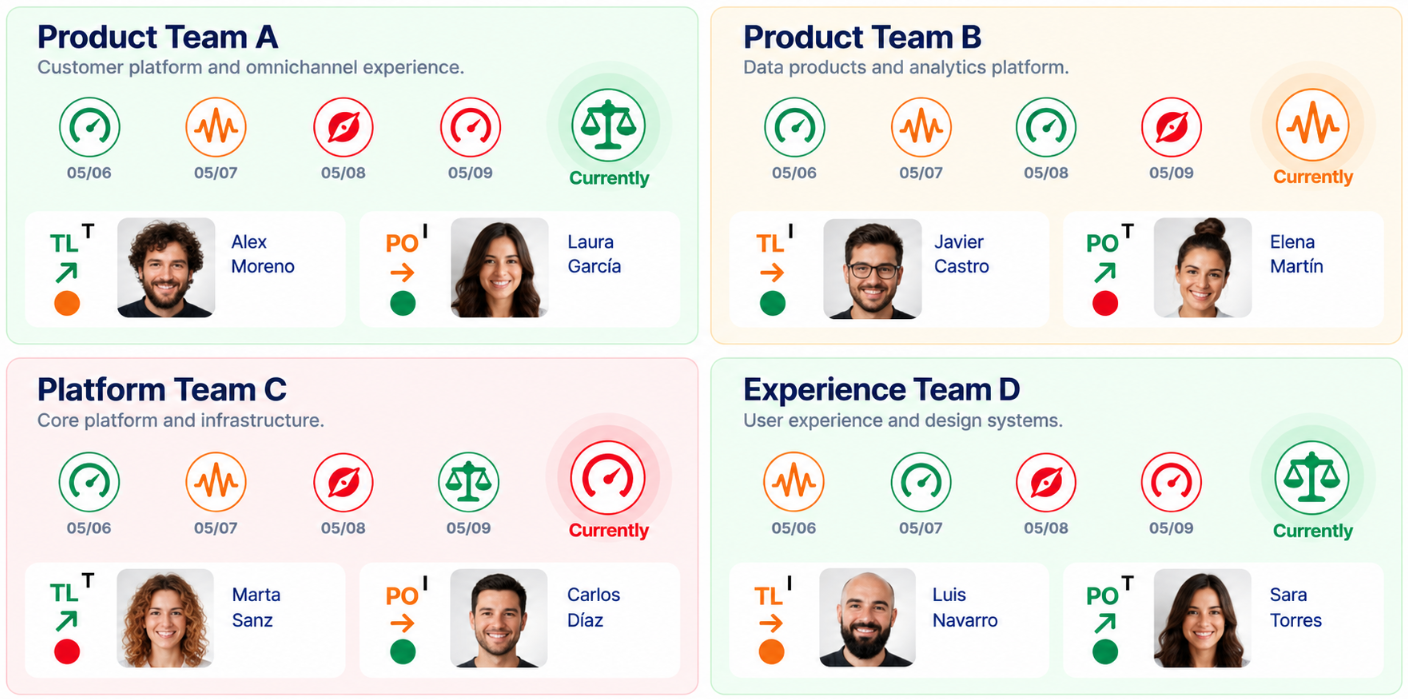
This broader perspective also allows us to observe something that is difficult to perceive from within a single system: the relationships and dependencies between different systems.
When Systems Need to Collaborate
Collaboration does not depend only on objectives, responsibilities, and processes. Each system enters that collaboration from its own situation, capabilities, energy, motivation, and context, and those conditions also influence the outcome.
Two teams may have the necessary capabilities and a genuine willingness to collaborate while both are experiencing Pressure. Introducing a new dependency at that moment may increase the existing load, make communication more difficult, and create friction. The problem may not be the people or the collaboration process itself, but the moment from which both systems are trying to interact.
Understanding their situations allows us to interpret those difficulties more accurately and decide with greater context whether to adjust the scope, change expectations, provide support, or modify certain conditions. Observing how the collaboration evolves afterwards also creates learning about how different situations interact with one another.
The same applies to other decisions. Moving a person, transferring a product, or assigning a new responsibility may appear reasonable from an organisational perspective, but its impact will depend on the situation and capabilities of the system experiencing that change.
Observing the Observers
A broader perspective does not replace close observation; it is built upon it.
Each observer remains close enough to their system to understand its people, capabilities, motivation, relationships, current situation, and recent evolution. When we zoom out, we do not attempt to reproduce that same observation from a greater distance. Instead, we rely on those contextual observations to build a broader perspective across multiple systems.
Each system retains its own context and Situational Memory, while observing across systems allows us to relate those different realities and better understand what happens between them. The Situational Compass can provide a lightweight view of how each system has been moving through different situations over time.
We do not need to create a single “organisational situation” or compare systems through scores. Two systems may both be experiencing Pressure for completely different reasons and require very different responses. What matters is preserving enough situational information to identify where we need to look more closely before making a decision.
SAMM scales by observing observers, not by abstracting people into organisational metrics.
Scaling SAMM therefore means accepting different levels of resolution. The closer we are to a system, the deeper our understanding of its reality. As we move further away, we lose detail, but gain the ability to observe relationships, dependencies, and needs across different systems.
When that broader perspective identifies something that requires attention, we zoom in through the observer closest to the system and recover the context needed before intervening. The goal is not to know everything, but to maintain enough situational awareness to know where to look and make better decisions.